
The Two Towers
J.R.R. Tolkien (1892–1973)
Houghton Mifflin Company • xxxx • 352 pages • hardcover

About the Author
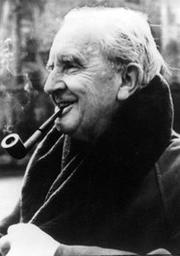
J.R.R. Tolkien
1892-1973 · 6 works
John Ronald Reuel Tolkien (1892-1973) was a major scholar of the English language, specialising in Old and Middle English. Twice Professor of Anglo-Saxon (Old English) at the University of Oxford, he also wrote a number of stories, including most famously The Hobbit (1937) and The Lord of the Rings (1954-1955), which are set in a pre-historic era in an invented version of the world which he called by the Middle English name of Middle-earth. This was peopled by Men (and women), Elves, Dwarves, Trolls, Orcs (or Goblins) and of course Hobbits. He has regularly been condemned by the Eng. Lit. establishment, with honourable exceptions, but loved by literally millions of readers worldwide. In the 1960s he was taken up by many members of the nascent "counter-culture" largely because of his concern with environmental issues. In 1997 he came top of three British polls, organised respectively by Channel 4 / Waterstone's, the Folio Society, and SFX, the UK's leading science fiction media magazine, amongst discerning readers asked to vote for the greatest book of the 20th century. ([Source][1]) [1]: http://www.tolkiensociety.org/tolkien/biography.html
Description
The Lord of the Rings, J.R.R. Tolkien's three-volume epic, is set in the imaginary world of Middle-earth -- home to many strange beings, and most notably hobbits, a peace-loving "little people," cheerful and shy. Since its original British publication in 1954-55, the saga has entranced readers of all ages. It is at once a classic myth and a modern fairy tale. Critic Michael Straight has hailed...
The Lord of the Rings, J.R.R. Tolkien's three-volume epic, is set in the imaginary world of Middle-earth -- home to many strange beings, and most notably hobbits, a peace-loving "little people," cheerful and shy. Since its original British publication in 1954-55, the saga has entranced readers of all ages. It is at once a classic myth and a modern fairy tale. Critic Michael Straight has hailed it as one of the "very few works of genius in recent literature." Middle-earth is a world receptive to poets, scholars, children, and all other people of good will. Donald Barr has described it as "a scrubbed morning world, and a ringing nightmare world...especially sunlit, and shadowed by perils very fundamental, of a peculiarly uncompounded darkness." The story of this world is one of high and heroic adventure. Barr compared it to Beowulf, C.S. Lewis to Orlando Furioso, W.H. Auden to The Thirty-nine Steps. In fact the saga is sui generis -- a triumph of imagination which springs to life within its own framework and on its own terms. - Jacket flap.
Frodo and the Companions of the Ring have been beset by danger during their quest to prevent the Ruling Ring from falling into the hands of the Dark Lord by destroying it in the Cracks of Doom. They have lost the wizard, Gandalf, in the battle with an evil spirit in the Mines of Moria; and at the Falls of Rauros, Boromir, seduced by the power of the Ring, tried to seize it by force. While Frodo and Sam made their escape the rest of the company were attacked by Orcs. Now they continue their journey alone down the great River Anduin – alone, that is, save for the mysterious creeping figure that follows wherever they go. J.R.R. Tolkien’s great work of imaginative fiction has been labelled both a heroic romance and a classic fantasy fiction. By turns comic and homely, epic and diabolic, the narrative moves through countless changes of scene and character in an imaginary world which is totally convincing in its detail.
Also contained in:
This Edition
Houghton Mifflin Company · xxxx · hardcover · 352 pages
- Language
- ENG


