
Oliver Twist
Charles Dickens (1812–1870)
Czytelnik • Jun 01, 1985 • 447 pages • unknown binding
About the Author
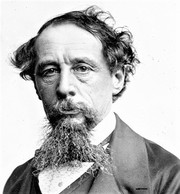
Charles Dickens
1812-1870 · 4 works
Charles Dickens, was the most popular English novelist of the Victorian era, and one of the most popular of all time. He created some of literature's most iconic characters, with the theme of social reform running throughout his work. The continuing popularity of his novels and short stories is such that they have never gone out of print. ([Source][1].) [1]:http://en.wikipedia.org/wiki/Charles_Dickens
Description
Oliver Twist; or, The Parish Boy's Progress, is the second novel by English author Charles Dickens. It was originally published as a serial from 1837 to 1839, and as a three-volume book in 1838. The story follows the titular orphan, who, after being raised in a workhouse, escapes to London, where he meets a gang of juvenile pickpockets led by the elderly criminal Fagin, discovers the secrets of...
Oliver Twist; or, The Parish Boy's Progress, is the second novel by English author Charles Dickens. It was originally published as a serial from 1837 to 1839, and as a three-volume book in 1838. The story follows the titular orphan, who, after being raised in a workhouse, escapes to London, where he meets a gang of juvenile pickpockets led by the elderly criminal Fagin, discovers the secrets of his parentage, and reconnects with his remaining family.
Oliver Twist unromantically portrays the sordid lives of criminals, and exposes the cruel treatment of the many orphans in London in the mid-19th century.[2] The alternative title, The Parish Boy's Progress, alludes to Bunyan's The Pilgrim's Progress, as well as the 18th-century caricature series by painter William Hogarth, A Rake's Progress and A Harlot's Progress.
In an early example of the social novel, Dickens satirises child labour, domestic violence, the recruitment of children as criminals, and the presence of street children. The novel may have been inspired by the story of Robert Blincoe, an orphan whose account of working as a child labourer in a cotton mill was widely read in the 1830s. It is likely that Dickens's own experiences as a youth contributed as well, considering he spent two years of his life in the workhouse at the age of 12 and subsequently, missed out on some of his education.
This Edition
Czytelnik · Jun 01, 1985 · unknown binding · 447 pages
- ISBN-13
- 9788307010540
- ISBN-10
- 8307010543
Tags
Similar Books
A Tale of Two Cities
Charles Dickens

Great Expectations
Charles Dickens
A Christmas Carol
Charles Dickens

To Kill a Mockingbird
Harper Lee
Harry Potter and the Deathly Hallows
J. K. Rowling

Harry Potter and the Half-Blood Prince
J. K. Rowling