
The Man Who Mistook His Wife for a Hat and Other Clinical Tales
Oliver Sacks (1933–2015)
Perennial Library • 1990 • 243 pages

Add The Man Who Mistook His Wif... to your shelf
Track your reading and build your collection
About the Author
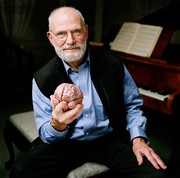
Oliver Sacks
1933-2015 · 1 work
Oliver Sacks, M.D. was a physician, a best-selling author, and a professor of neurology at the NYU School of Medicine. The New York Times has referred to him as “the poet laureate of medicine.” He is best known for his collections of neurological case histories, including The Man who Mistook his Wife for a Hat, Musicophilia: Tales of Music and the Brain and An Anthropologist on Mars. Awakenings, his book about a group of patients who had survived the great encephalitis lethargica epidemic of the early twentieth century, inspired the 1990 Academy Award-nominated feature film starring Robert De Niro and Robin Williams. Dr. Sacks was a frequent contributor to the New Yorker and the New York Review of Books. ([source][1]) [1]: https://www.oliversacks.com/about-oliver-sacks/
Description
In his most extraordinary book, “one of the great clinical writers of the twentieth century” (The New York Times) recounts the case histories of patients lost in the bizarre, apparently inescapable world of neurological disorders.
Oliver Sacks’s The Man Who Mistook His Wife for a Hat tells the stories of individuals afflicted with fantastic perceptual and intellectual aberrations: patients...
In his most extraordinary book, “one of the great clinical writers of the twentieth century” (The New York Times) recounts the case histories of patients lost in the bizarre, apparently inescapable world of neurological disorders.
Oliver Sacks’s The Man Who Mistook His Wife for a Hat tells the stories of individuals afflicted with fantastic perceptual and intellectual aberrations: patients who have lost their memories and with them the greater part of their pasts; who are no longer able to recognize people and common objects; who are stricken with violent tics and grimaces or who shout involuntary obscenities; whose limbs have become alien; who have been dismissed as retarded yet are gifted with uncanny artistic or mathematical talents.
If inconceivably strange, these brilliant tales remain, in Dr. Sacks’s splendid and sympathetic telling, deeply human. They are studies of life struggling against incredible adversity, and they enable us to enter the world of the neurologically impaired, to imagine with our hearts what it must be to live and feel as they do. A great healer, Sacks never loses sight of medicine’s ultimate responsibility: “the suffering, afflicted, fighting human subject.”
This Edition
Perennial Library · 1990 · 243 pages
- ISBN-10
- 0060970790
- Language
- ENG

