
Walden
Henry David Thoreau (1817–1862)
Independently Published • Apr 17, 2019 • 175 pages • paperback
About the Author
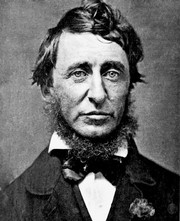
Henry David Thoreau
1817-1862
Henry David Thoreau (born David Henry Thoreau) was an American author, poet, naturalist, tax resister, development critic, surveyor, historian, philosopher, and leading transcendentalist. He is best kn...
Henry David Thoreau (born David Henry Thoreau) was an American author, poet, naturalist, tax resister, development critic, surveyor, historian, philosopher, and leading transcendentalist. He is best known for his book Walden, a reflection upon simple living in natural surroundings, and his essay, Civil Disobedience, an argument for individual resistance to civil government in moral opposition to an unjust state. Thoreau's books, articles, essays, journals, and poetry total over 20 volumes. Among his lasting contributions were his writings on natural history and philosophy, where he anticipated the methods and findings of ecology and environmental history, two sources of modern day environmentalism. His literary style interweaves close natural observation, personal experience, pointed rhetoric, symbolic meanings, and historical lore; while displaying a poetic sensibility, philosophical austerity, and "Yankee" love of practical detail. He was also deeply interested in the idea of survival in the face of hostile elements, historical change, and natural decay; at the same time imploring one to abandon waste and illusion in order to discover life's true essential needs. ([Source][1]) [1]: https://en.wikipedia.org/wiki/Henry_David_Thoreau
Description
Walden first published in 1854 as Walden; or, Life in the Woods) is a book by American transcendentalist writer Henry David Thoreau. The text is a reflection upon the author's simple living in natural surroundings. The work is part personal declaration of independence, social experiment, voyage of spiritual discovery, satire, and—to some degree—a manual for self-reliance.
Walden details Thoreau's experiences over the course of two years, two months, and two days in a cabin he built near Walden Pond amidst woodland owned by his friend and mentor Ralph Waldo Emerson, near Concord, Massachusetts.
Thoreau makes precise scientific observations of nature as well as metaphorical and poetic uses of natural phenomena. He identifies many plants and animals by both their popular and scientific names, records in detail the color and clarity of different bodies of water, precisely dates and describes the freezing and thawing of the pond, and recounts his experiments to measure the depth and shape of the bottom of the supposedly "bottomless" Walden Pond.
(Source: Wikipedia)
This Edition
Popular Tags
Popular tags defined by the community


